How Precision Optical Components Drive Innovation in Modern Photonics
septiembre 21, 2026 · Admin我的商店
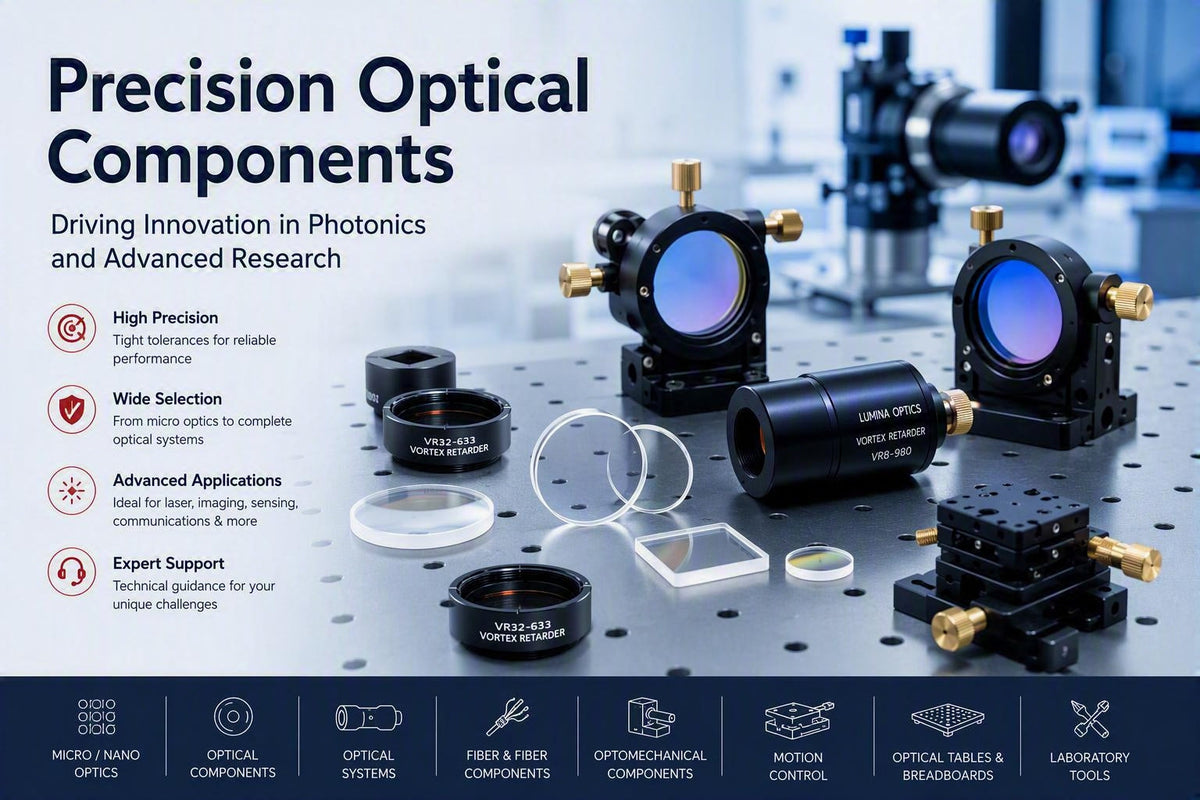
The Growing Importance of Precision Optics in Scientific Research and Industry
As industries increasingly rely on advanced photonics technologies, precision optical components have become the foundation of innovation across scientific research, semiconductor manufacturing, telecommunications, biomedical imaging, and laser systems.
From micro and nano optics to sophisticated motion control systems, today's optical solutions enable researchers and engineers to achieve unprecedented levels of accuracy, efficiency, and performance.
At Optics Supply Pro, we provide a comprehensive portfolio of optical products designed to support next-generation photonics applications.
Understanding the Building Blocks of Optical Systems
Modern photonic systems depend on multiple optical elements working together seamlessly.
Optical Components
Optical components form the backbone of any optical setup. These include:
- Precision lenses
- Optical mirrors
- Bandpass filters
- Polarization optics
- Beam shaping elements
High-quality optical components help maximize light transmission, minimize aberrations, and improve system stability.
Applications include:
- Laser processing
- Spectroscopy
- Machine vision
- Scientific instrumentation
The Critical Role of Micro and Nano Optics
As technology advances, demand for smaller and more powerful optical devices continues to grow.
Micro and nano optics enable:
- Compact optical systems
- Enhanced beam manipulation
- High-precision light control
- Advanced imaging solutions
Diffractive optical elements and metasurfaces are revolutionizing optical design by replacing conventional bulky optics with lightweight and highly efficient alternatives.
These technologies are increasingly used in:
- AR/VR systems
- Semiconductor inspection
- Medical diagnostics
- Quantum technologies
Why Polarization Control Matters
Polarization is a fundamental property of light that significantly impacts optical performance.
Components such as:
- Half-wave retarders
- Quarter-wave plates
- Vortex retarders
- Polarization converters
allow engineers to manipulate light polarization for enhanced functionality.
For laser applications, polarization control can improve:
- Beam quality
- Energy efficiency
- Measurement accuracy
- Imaging contrast
Vortex retarders, in particular, are gaining popularity in advanced beam shaping applications where precise phase and polarization control is essential.
Fiber Optics: Powering the Connected Future
Fiber optic technology remains central to modern communication and sensing applications.
Fiber components such as:
- Fiber collimators
- Optical couplers
- Fiber assemblies
- Alignment systems
enable efficient light transmission with minimal losses.
Key industries benefiting from fiber optics include:
- Telecommunications
- Aerospace
- Defense
- Industrial automation
- Scientific instrumentation
Motion Control and Optomechanics: Enabling Precision Alignment
Even the most advanced optical component cannot deliver optimal performance without proper positioning.
Motion control systems provide:
- Sub-micron positioning accuracy
- Stable alignment
- Automated optical calibration
- Repeatable experimental results
Optomechanical components such as mounts, stages, posts, and apertures ensure reliable integration of optical elements within complex systems.
These technologies are essential for laser laboratories, optical testing facilities, and R&D environments.
Building a Reliable Optical Laboratory
A professional optical setup goes beyond individual components.
Optical tables and breadboards help:
- Minimize vibration
- Improve stability
- Increase measurement accuracy
- Support complex experimental configurations
Together with laboratory alignment tools and cleaning equipment, they create an environment where precision optical systems can perform at their highest potential.
Choosing the Right Optical Partner
Selecting the right supplier is as important as selecting the right component.
Researchers and engineers should look for:
- High manufacturing standards
- Reliable product performance
- Application expertise
- Comprehensive product range
- Technical support
At Optics Supply Pro, we are committed to supporting laboratories, research institutions, and industrial innovators with precision optical solutions designed to meet the evolving challenges of modern photonics.
Final Thoughts
From micro optics and polarization control devices to complete optical systems and motion control platforms, precision optics continue to drive breakthroughs across science and industry.
As photonics technologies expand into new fields, investing in high-quality optical components is critical for achieving superior performance, greater reliability, and long-term success.